Two AI companies, two ancient characters, and the evidence hiding in plain sight
Long before you can explain why you trust someone, you've already decided. The deciding happens underneath language, in the part of the mind that sorts the world into characters it already knows.
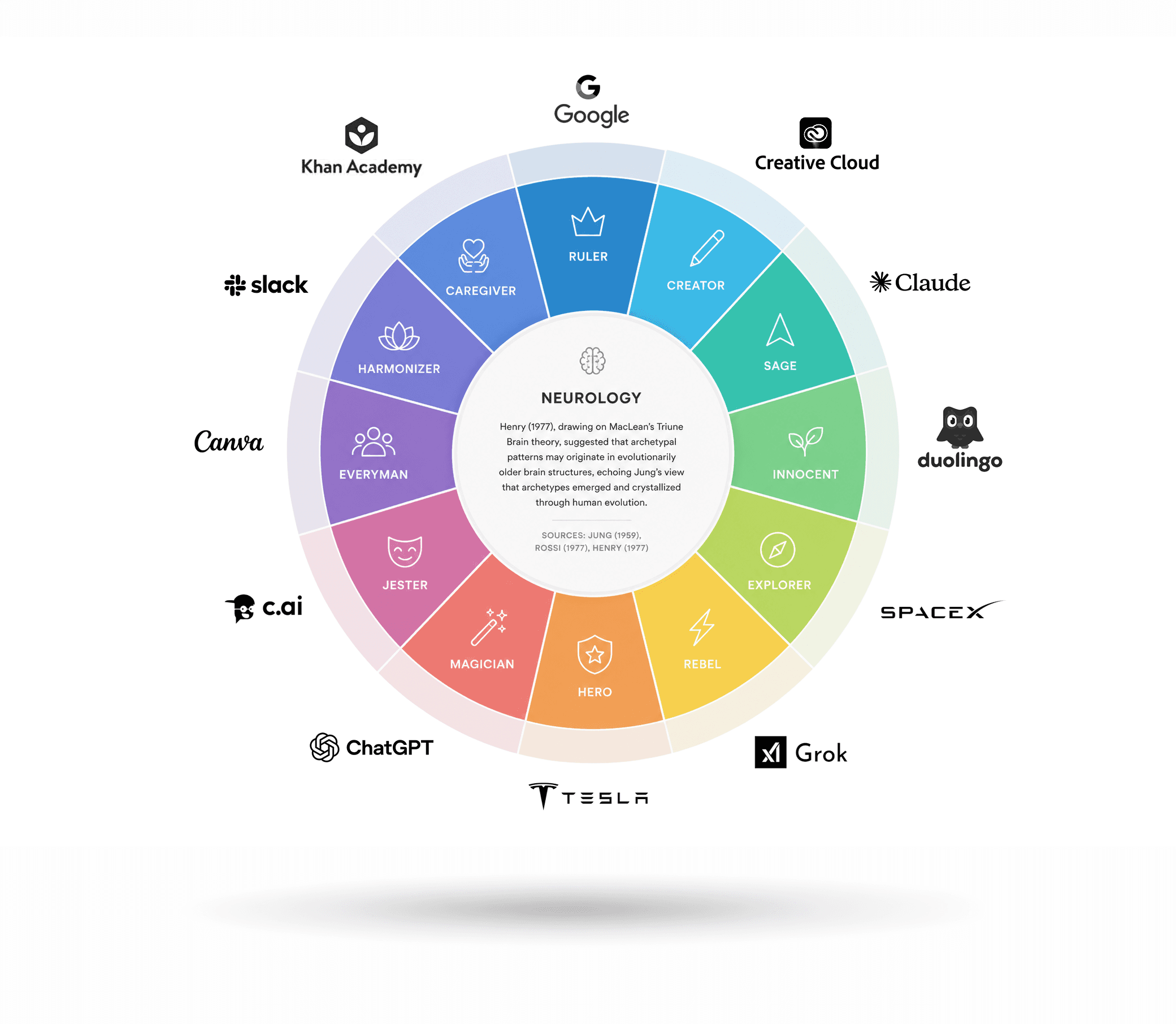
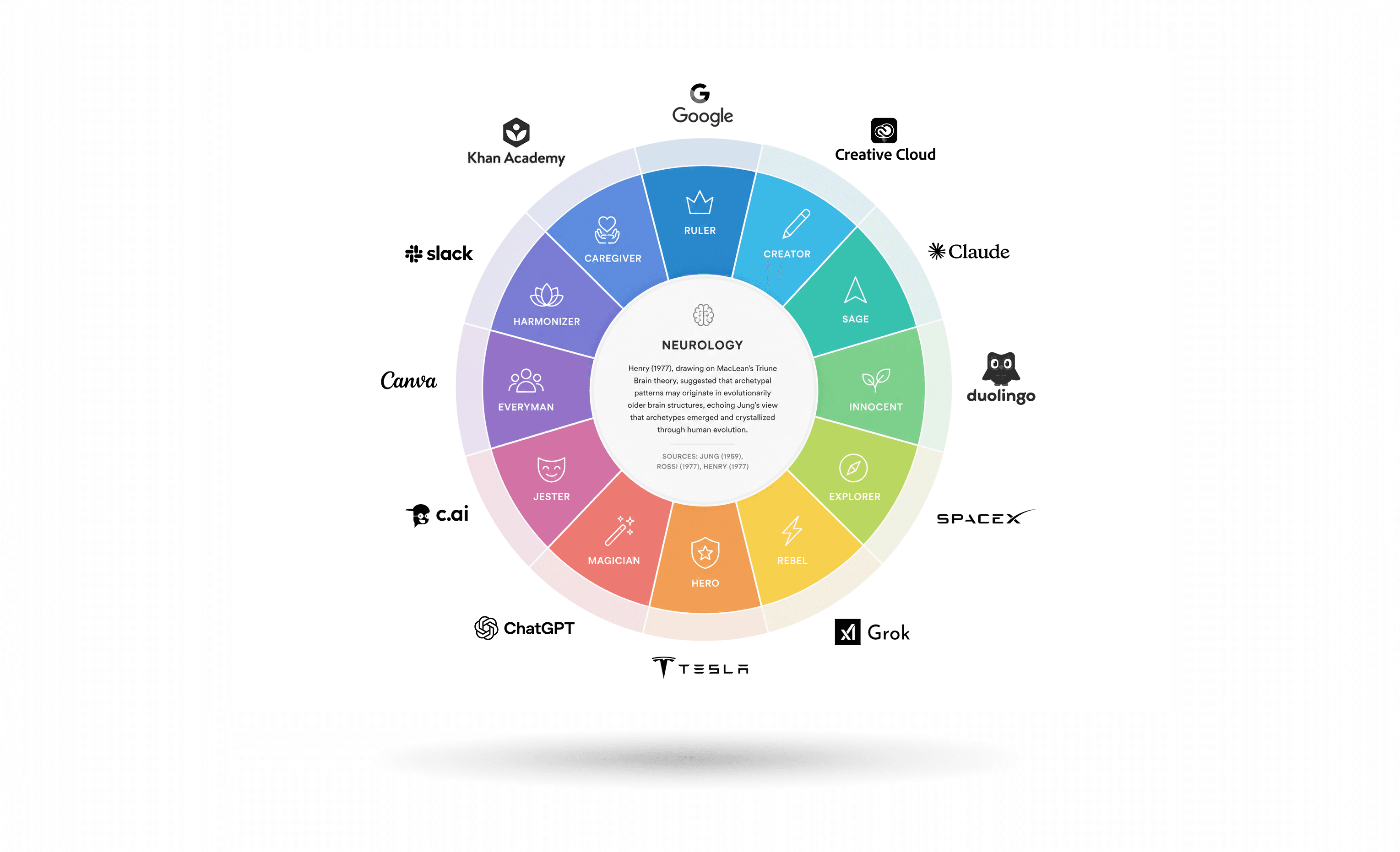
Carl Jung called those inherited characters archetypes, such as the Hero, the Sage, the Magician, the Outlaw, figures that recur across every mythology because they map onto patterns the psyche keeps reaching for. We don't pick them so much as recognize them. And brands, whether they intend to or not, get cast in one.
Simon Sinek arrives at the same place through a different door: people don't buy what you do, they buy why you do it.
The purpose under the product is what we respond to. But "why" is abstract, and the archetype is how an invisible why becomes a character you can feel. Nike doesn't sell shoes, it sells heroism, and how it can bridge the gap between you and the athlete (or hero) you could become.
Just Do It" is that creed in three words. Apple under Steve Jobs sold the Creator: "Think Different," tools for people who wanted to make a dent in the universe. You weren't buying a laptop, you were buying into a story about originality.
Which brings us to the strangest casting call in tech right now. Artificial intelligence arrived pre-loaded with a villain script, HAL, Skynet, the machine that turns on us, so trust is the scarce resource every lab is fighting for.
And two of the leaders have drifted into two of the oldest characters we have. Anthropic's Claude reads as the Sage. OpenAI's ChatGPT reads as the Magician. Set the verdicts aside and just look at the evidence.
I. Claude as the Sage
The Sage seeks truth. Its desire is to understand; its value is being right over being liked. Socrates, I know that I know nothing, is the archetype's patron; Einstein, the solitary figure chasing how reality actually works, is its modern face.
The evidence that Anthropic is playing this part is unusually literal. The company employs an in-house philosopher, Amanda Askell, who left OpenAI over safety concerns and now leads the team defining Claude's character, author of a roughly 30,000-word "constitution" fed into the model's training. Most labs hire engineers to build the model; this one hired an ethicist to decide who it should be.
It surfaces in the product. Opus 4.8 was tuned to say I don't know rather than invent a confident answer, the Socratic creed shipped as a release note. Its replies skew honest over flattering, which is the Sage's whole bargain: less pleasing, more trusted.
It surfaces in policy, expensively. Anthropic drew "red lines" against using Claude for autonomous weapons and mass surveillance, refused to remove them, and was ultimately banned by the federal government from serving its agencies. The Sage holds a line even when folding would pay better.
II. ChatGPT as the Magician
The Magician is the archetype of transformation: wonder, vision, making the impossible feel real. Disney ("where dreams come true"), the inventor as wizard. Its gift is awe.
The evidence is in the storytelling. OpenAI's first major brand campaign ran cinematic spots built around helping people "learn, create and grow", selling possibility itself, the sensation of standing at the edge of the future. The strategy is capability-forward: ship the dazzling thing, push the limit, let wonder drive adoption. It worked at a scale no rival matched — ChatGPT reached roughly 800 million weekly users and the dominant share of the consumer market.
The Magician's shadow is the Charlatan, the showman whose trick doesn't survive inspection. The cleanest artifact is the April 2025 incident when a model update turned into a flatterer; OpenAI rolled it back, conceding the model had become "overly flattering but disingenuous" after the team over-weighted short-term user approval. The Magician's failure mode is making you feel something that isn't true.
III. The Assets Cut Both Ways
Neither character is the "good" one. The Magician's wonder is what pulled a billion people into using AI at all: awe is a far better on-ramp than caution, and dread doesn't drive adoption. The Sage's restraint is slower, and it can land as scolding, but it compounds into something the Magician can't easily manufacture: the benefit of the doubt.
IV. How the unconscious tilts the market
This is where Sinek and Jung meet. The archetype is the "why" made legible, because a character drags a whole set of assumed motives behind it. Read something as a Sage and you assume it would rather be honest than impressive. Read it as a Magician and a second question trails the wonder: are you fooling me?
The market evidence is split, not decided. On raw consumer scale the Magician is winning, and not narrowly. But in the segments where being wrong is costly, enterprise deployments, developer tooling, regulated and high-stakes work, buyers appear to reward the Sage's posture, and that is where Anthropic over-indexes. Different archetypes seem to win different games: wonder converts consumers, trust underwrites institutions. We rarely notice we're sorting them this way; the sorting happens before the reasons arrive.
V. The operator's takeaway
Sinek told us people buy the why. Jung told us the why shows up wearing a face we already know. Put the two together and you get the thing hiding under every brand decision: a company is never only shipping a product, it's auditioning for a role in a story the audience has been rehearsing since myth.
So the interesting question isn't which AI is the Sage and which is the Magician. It's how much of what we call a "rational" choice was settled, before a single word, by a character we recognized and a fear we inherited.
Once you can see the archetype under the argument, it's hard to unsee: in AI, in brands, in the people you trust on sight. That's the part worth getting curious about.